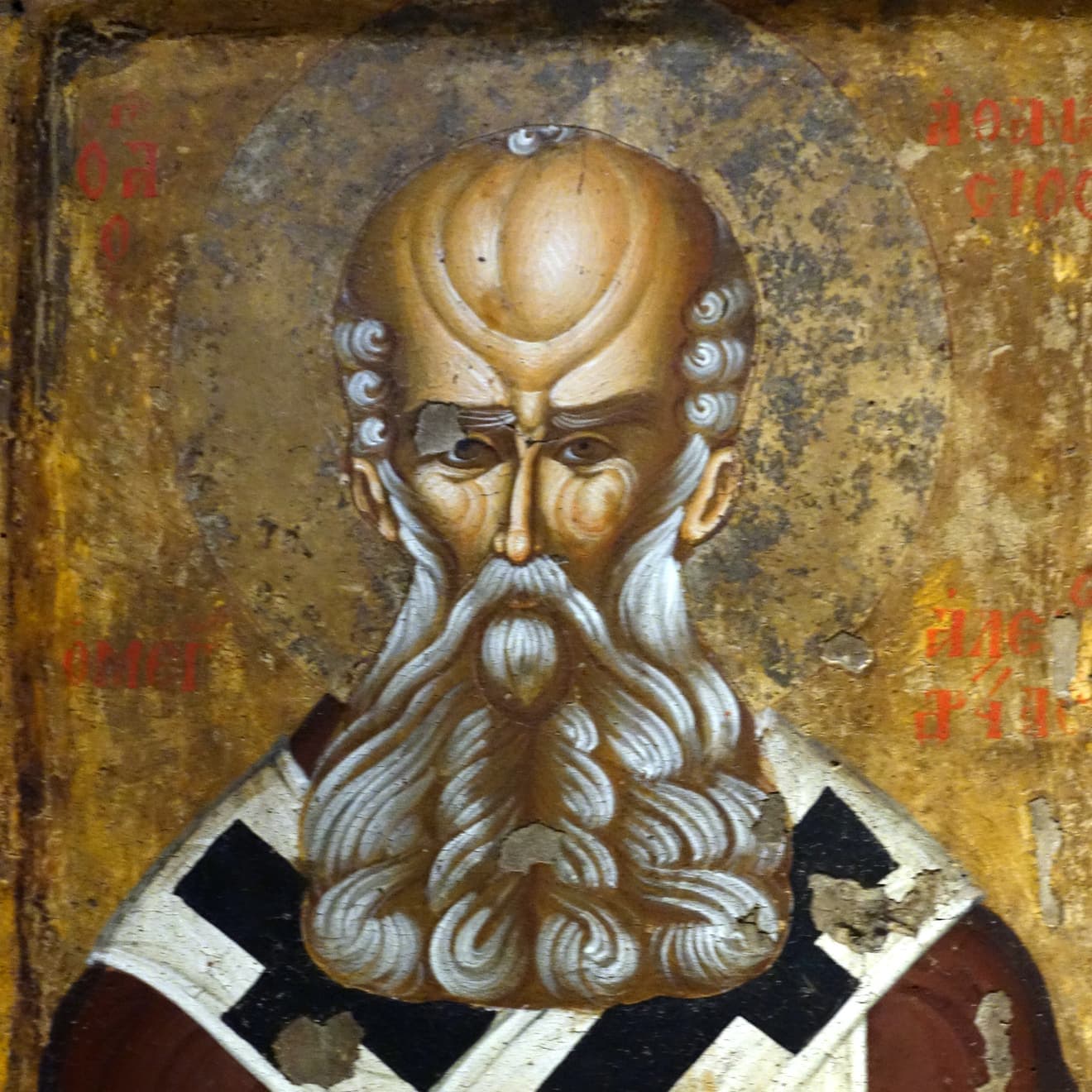
St. Athanasius of Alexandria
Nicene19 works on Theoria16 with audio
Works available to read
- Against the AriansThe Four Discourses Against the Arians, Athanasius's most sustained doctrinal refutation of Arianism, answering its scriptural appeals and expounding the eternal generation and consubstantiality of the Son.
- Against the HeathenContra Gentes, the first half of Athanasius's early double work (paired with On the Incarnation), showing the emptiness of idolatry and leading the reader toward knowledge of the one God through the Logos.
- Apology to the EmperorApologia ad Constantium, Athanasius's personal defense before the emperor against the political charges brought against him — including alleged intrigue with Constans and Magnentius and the use of the Caesareum for Easter worship.
- Arian HistoryHistoria Arianorum ad Monachos, an impassioned historical narrative written in hiding in 358, tracing the Arian campaign against the Nicene faith and denouncing the emperor Constantius as its patron.
- Circular to Bishops of Egypt and LibyaAn encyclical letter of 356 warning the bishops of Egypt and Libya against a post-Arian creed being forced upon the churches, and appealing for steadfast adherence to the Nicene confession.
- Defence Against the AriansApologia Contra Arianos, a documentary defense gathering the synodal records and letters by which Athanasius was repeatedly acquitted of the political and criminal charges brought against him by the Eusebian party.
- Defence of DionysiusDe Sententia Dionysii, a letter demonstrating that Bishop Dionysius of Alexandria — whom the Arians claimed as a forerunner — in fact opposed the heresy, vindicating his orthodoxy against their use of his words.
- Defence of His FlightApologia de Fuga, written from exile in 357, defending Athanasius's flight from Alexandria by appeal to the example of the saints and of Christ Himself, and condemning persecution as inherently diabolical.
- Defence of the Nicene DefinitionDe Decretis, an explanation and defense of the Council of Nicaea's anti-Arian definitions — especially the term homoousios — showing their scriptural and traditional roots.
- Deposition of AriusThe encyclical and synodal documents from Alexandria formally deposing Arius and his partisans, preserved in Athanasius's dossier as a witness to the original condemnation of the heresy.
- Encyclical LetterThe Encyclical Letter of 339 addressed to all Catholic bishops, describing the violent installation of the Arian Gregory at Alexandria and appealing for communion and support after Athanasius's expulsion.
- Letters of Athanasius with Two Ancient Chronicles of His LifeAthanasius's surviving letters — festal and personal — together with the two ancient chronicles (the Historia Acephala and the Chronicon Prævium) that frame his episcopal career and exiles.
- Life of AntonyThe founding text of Christian hagiography: Athanasius's biography of St. Antony the Great, whose flight to the Egyptian desert and lifelong ascetic warfare shaped the monastic imagination of East and West.
- On Luke 10:22A short exegetical treatise on Luke 10:22 and Matthew 11:27 ("all things have been delivered to me by my Father"), answering the Arian appeal to the text and showing it speaks of the Incarnation rather than a temporal bestowal of lordship.
- On the Councils of Ariminum and SeleuciaDe Synodis, Athanasius's analytical account of the twin Arian councils of 359 at Ariminum and Seleucia, documenting their creedal maneuvers and defending the Nicene formula against them.
- On the Incarnationc. 318 ADAthanasius's classic defense of the Incarnation, explaining why God became man and the necessity of Christ's death and resurrection.
- Statement of FaithExpositio Fidei, a brief early creedal statement confessing one unbegotten Father, the eternally begotten Son as "very God of very God," and the incarnation and saving work of the Word. Transmitted under Athanasius's name, its authorship is disputed.
- Synodal Letter to the Bishops of AfricaAd Afros Epistola Synodica, issued in 369 in the name of ninety Egyptian and Libyan bishops, warning the African church against Arian attempts to elevate the council of Ariminum in place of Nicaea.
- Synodal Letter to the People of AntiochTomus ad Antiochenos, the synodal letter of 362 setting terms for reconciling former Arians, affirming the full humanity of Christ and the divinity of the Holy Spirit, and addressing the schism at Antioch.
Browse every Church Father in the authors index or the full Theoria library.